


LAST UPDATED
13 August 2026
Tesla Powerwall 3
Take control of your home energy with Tesla Powerwall 3 – the fully integrated battery system that stores solar energy for use whenever you need it. Whether you want to reduce your electricity bills, protect your home during power cuts, or simply make the most of your solar panels, Powerwall 3 delivers reliable performance backed by Tesla’s industry-leading technology.
As a Tesla Certified Installer, Simple Solar provides expert Powerwall installations throughout the south-west, covering Devon, Cornwall, Somerset, and Dorset. Our team handles everything from initial survey to commissioning, ensuring your system is configured perfectly for your home.
Below you’ll find comprehensive information about Powerwall 3 specifications, installation options, pricing considerations, and answers to the most common questions we receive from customers.

Table of Contents
INSTALLERS
What Is Tesla Powerwall 3?
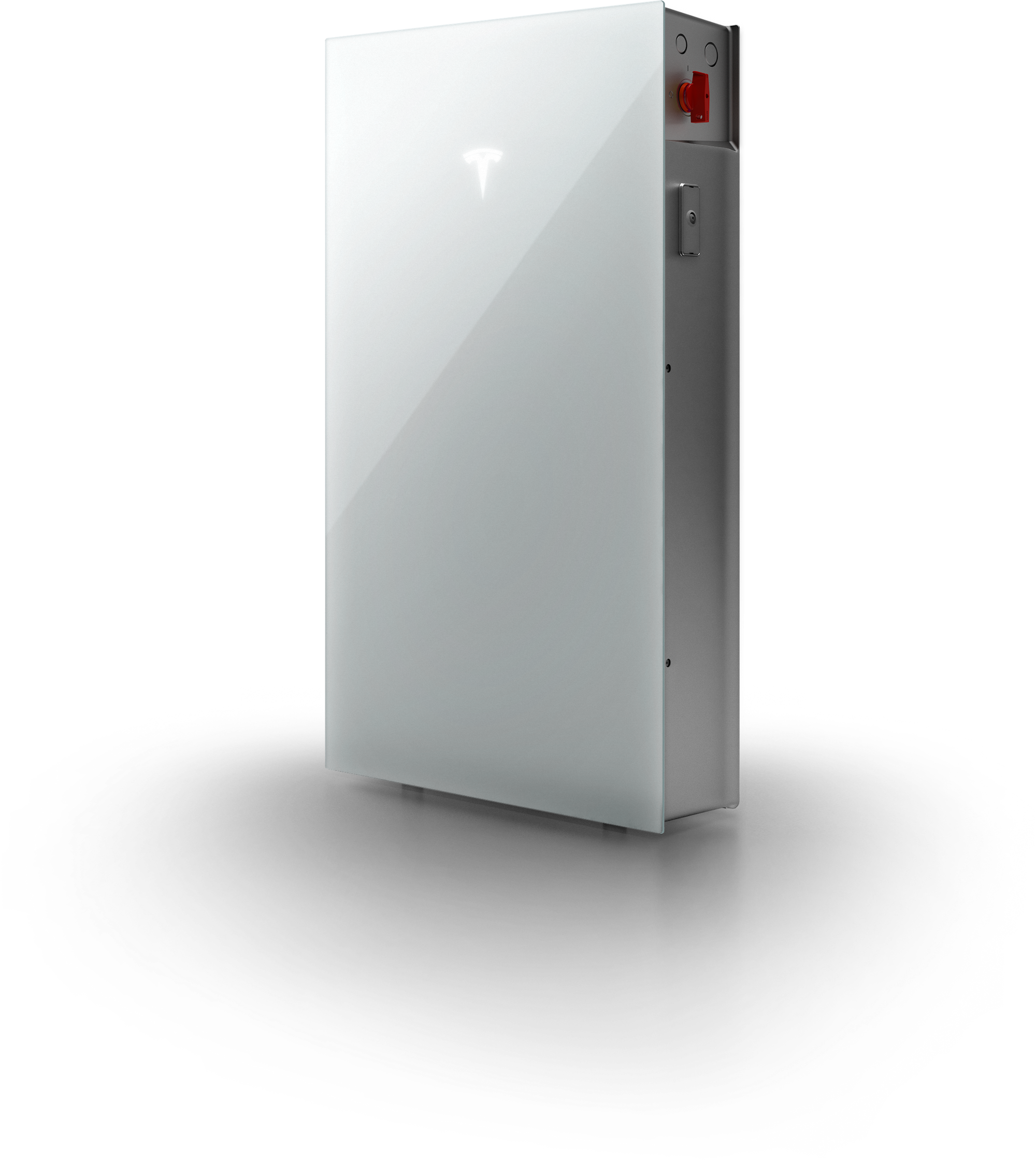
Tesla Powerwall 3 is a rechargeable home battery system designed to store electricity generated by solar panels — or drawn from the grid — for use at a later time. It represents the latest generation of Tesla’s home energy storage technology, building on the success of Powerwall 2 with improvements to power output, efficiency, and system integration.
At its core, Powerwall 3 serves three main purposes:
-
Maximise solar self-consumption
-
Backup power during outages (backup version)
-
Intelligent energy management via the Tesla app
Key Improvements Over Previous Generations
Powerwall 3 introduces several meaningful advancements over Powerwall 2. The integrated solar inverter accepts up to 20 kW of solar input across three separate maximum power point trackers (MPPTs), making it suitable for larger solar arrays.
Power output has increased substantially, with continuous output reaching up to 11.04 kW depending on the configuration – more than double that of Powerwall 2.
Efficiency has also improved. When solar energy passes through Powerwall 3 directly to your home or the grid (without being stored), the system achieves 97.5% efficiency. For energy that is stored and later discharged, round-trip efficiency sits at 89%. These figures represent genuine improvements that translate to more usable energy from your solar panels.
Tesla Powerwall 3 Specifications
The following specifications are taken from Tesla’s official UK datasheet for Powerwall 3. All figures relate to the UK version operating at 230V, 50Hz.
Energy Storage and Power Output
Powerwall 3 stores 13.5 kWh of usable energy – sufficient to power most homes through an evening and overnight period when solar generation has stopped. For context, the average UK household uses approximately 8-10 kWh per day, though homes with electric vehicle charging or heat pumps will use considerably more.
Continuous power output ranges from 3.68 kW to 11.04 kW, depending on your electrical configuration and the overcurrent protection device fitted. For most residential installations, outputs of 5-7 kW are typical and more than adequate for running normal household loads.
The system can also handle demanding start-up loads – rated at 185 ‘locked rotor amps’ (LRA) – meaning it can start heavy appliances like air conditioning units or well pumps without difficulty.
| Specification | Value |
|---|---|
| Nominal Battery Energy | 13.5 kWh |
| Continuous Power Output | 3.68 kW to 11.04 kW (configuration dependent) |
| Load Start Capability | 185 A LRA |
| Solar to Battery to Home/Grid Efficiency | 89% |
| Solar to Home/Grid Efficiency | 97.5% |
| Warranty | 10 years |
Solar Integration
One of Powerwall 3’s standout features is its integrated solar inverter. This handles DC electricity from your solar panels and converts it to AC for use in your home, eliminating the need for a separate string inverter in new installations.
The inverter supports up to 20 kW of solar input – enough for a very large residential system or small commercial installation. It features three independent MPPTs, which is particularly useful if your solar panels are split across multiple roof orientations or face partial shading issues. Each MPPT can handle up to 26 amps, with a voltage operating range of 60-480V DC.
| Solar Specification | Value |
|---|---|
| Maximum Solar Input | 20 kW |
| Number of MPPTs | 3 |
| MPPT Voltage Range | 60-480 V DC |
| Maximum Current per MPPT | 26 A |
| Maximum Short Circuit Current per MPPT | 30 A |
For homes with existing solar installations, Powerwall 3 can also be AC-coupled. In this configuration, your existing inverter continues to operate, and Powerwall 3 monitors energy flows using Tesla’s Remote Meter system. This makes retrofitting Powerwall to an existing solar system straightforward.
Physical Dimensions and Installation Requirements
Powerwall 3 measures 1,105 mm tall, 609 mm wide, and 193 mm deep. It weighs 130 kg, which means wall mounting requires a suitably sturdy surface – most commonly a garage or utility room wall. Floor mounting is also an option, and is required if you plan to add Expansion packs.
The unit carries an IP55 enclosure rating overall, with the battery and power electronics compartment achieving IP67. This means Powerwall 3 is rated for both indoor and outdoor installation, handling rain, dust, and humidity without issue. It operates across a temperature range of −20°C to +50°C, though performance may be reduced at the extremes.
Noise output is modest, typically below 50 dB(A) during normal operation, which is comparable to a quiet conversation or a modern refrigerator. Maximum noise levels can reach 62 dB(A) during intensive charging or discharging, but this is infrequent in normal use.
| Physical Specification | Value |
|---|---|
| Dimensions (H x W x D) | 1,105 × 609 × 193 mm |
| Weight | 130 kg |
| Mounting Options | Floor or wall mount |
| Enclosure Rating | IP55 (IP67 for battery compartment) |
| Operating Temperature | −20°C to +50°C |
| Typical Operating Noise | < 50 dB(A) |
Powerwall 3 Expansion Packs
For homeowners requiring more than 13.5 kWh of storage, Tesla offers two routes to increased capacity by adding:
Understanding the difference is important for making a cost-effective choice.
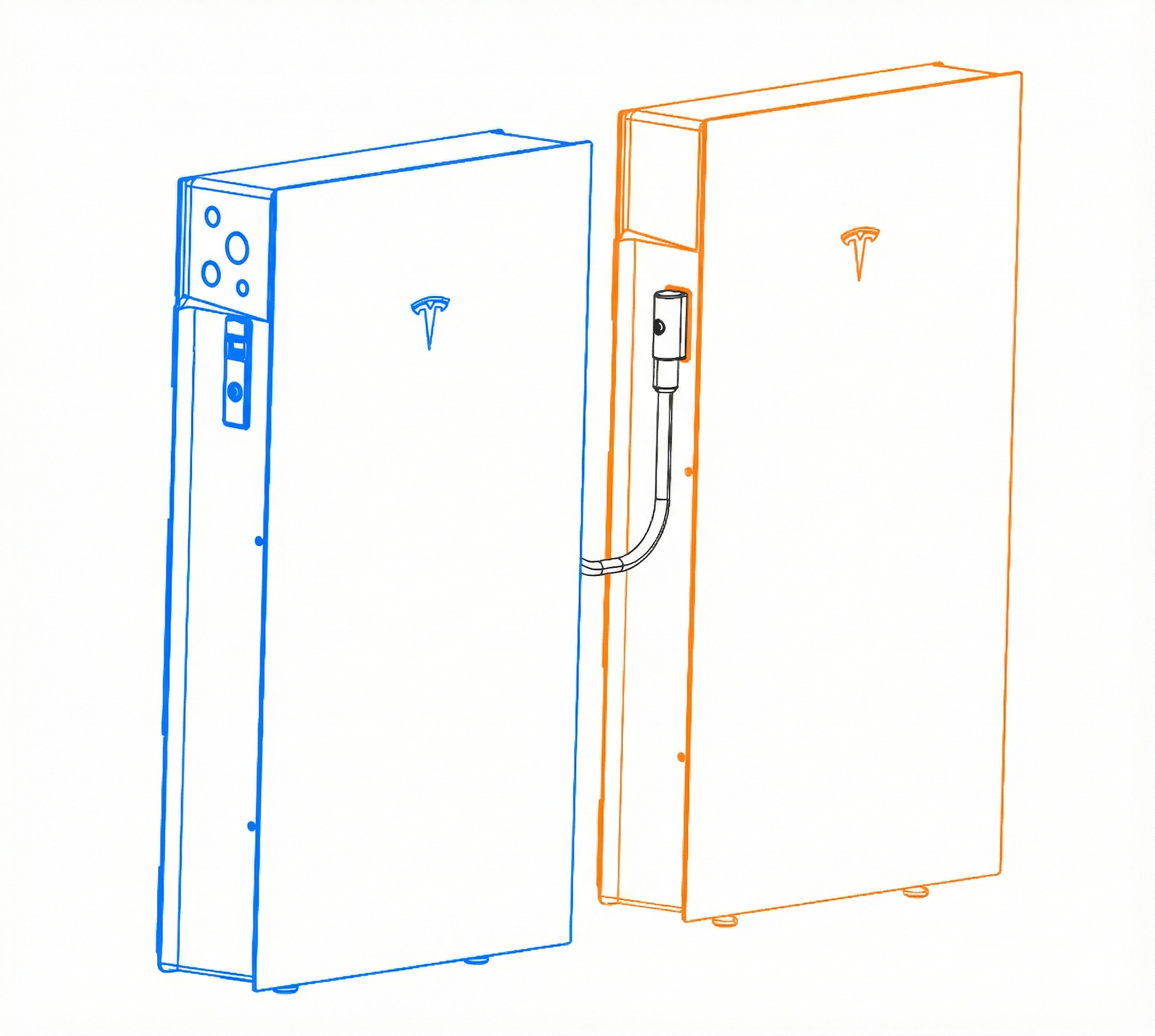
A Powerwall 3 Expansion is a battery-only unit that provides an additional 13.5 kWh of storage capacity. Unlike a full Powerwall 3, it does not include inverter hardware or solar inputs. It simply adds battery capacity to an existing Powerwall 3 system. Expansions connect to the main Powerwall 3 unit via a harness cable and cannot operate independently.
The Expansion unit is physically similar to a standard Powerwall 3, but slightly shallower at 168 mm depth (compared to 193 mm). It also weighs less: 110 kg for the core unit, or 118.5 kg with the wall-mounting bracket and glass front cover. This makes handling and installation somewhat easier.
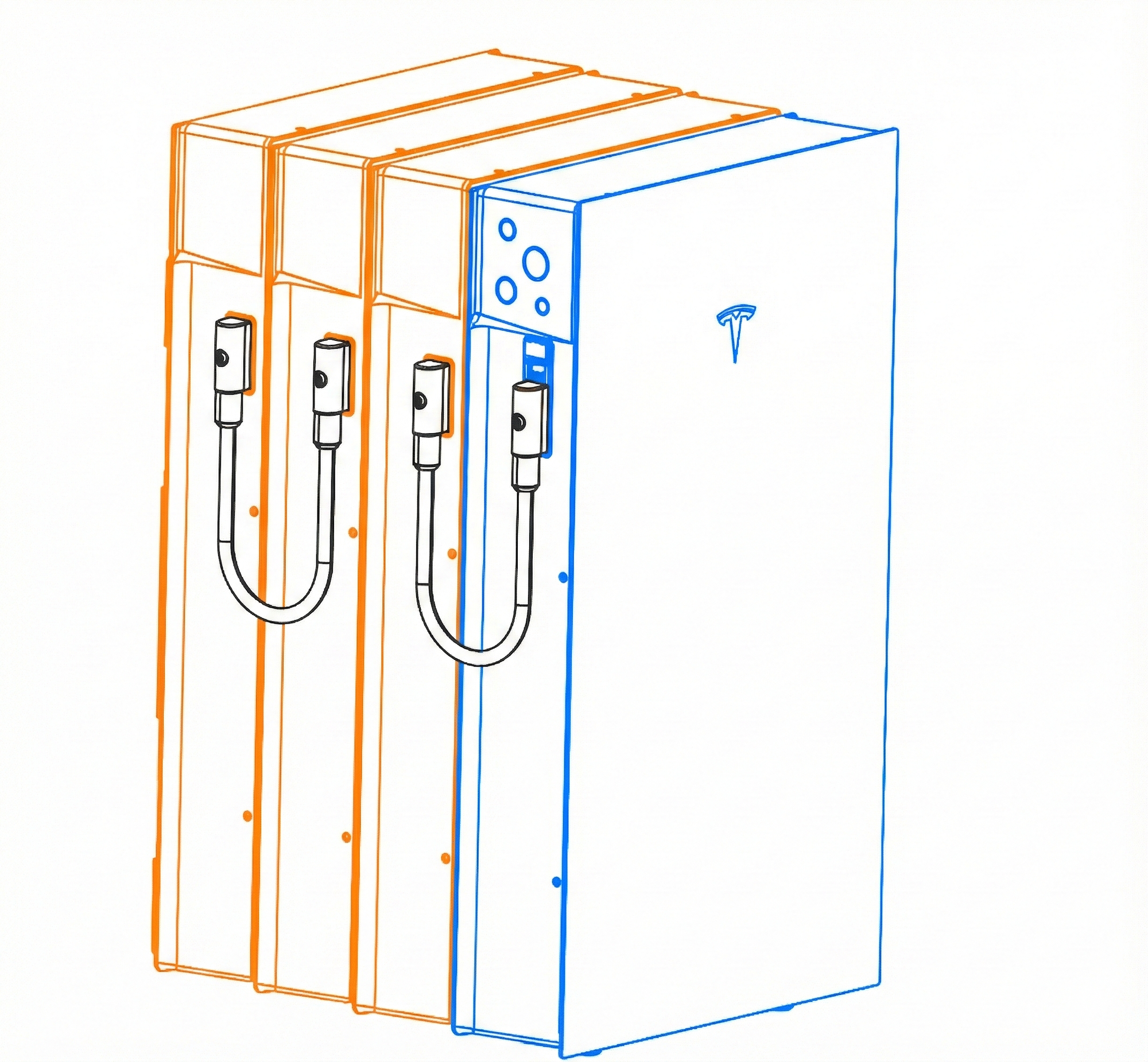
Tesla supports systems comprising up to four Powerwall 3 units and up to three Expansion units, for a maximum of seven units in total. This enables system configurations scaling from a single 13.5 kWh unit right up to 94.5 kWh of storage with 44 kW of continuous power output.
In practical terms, most residential customers find that one or two Powerwall 3 units – potentially with an Expansion – meet their needs comfortably. The larger configurations are typically relevant for properties with very high energy demands, those seeking extended off-grid capability, or small commercial premises.
When planning system expansion, it’s worth noting that up to three Expansion units can stack behind a single Powerwall 3, but this requires floor mounting. Wall-mounted Powerwall 3 units cannot have Expansions stacked behind them. This table show some possible configurations:
| Configuration | Total Capacity |
|---|---|
| 1 x Powerwall 3 | 13.5 kWh |
| 1 x Powerwall 3 + 1 x Expansion | 27 kWh |
| 1 x Powerwall 3 + 3 x Expansions | 54 kWh |
| 4 x Powerwall 3 units | 54 kWh |
| 4 x Powerwall 3 + 3 x Expansions (maximum) | 94.5 kWh |

Backup vs Non-Backup Installation
Powerwall 3 can be installed in two distinct configurations: backup and non-backup. The right choice depends on whether protection against power cuts is a priority for you.
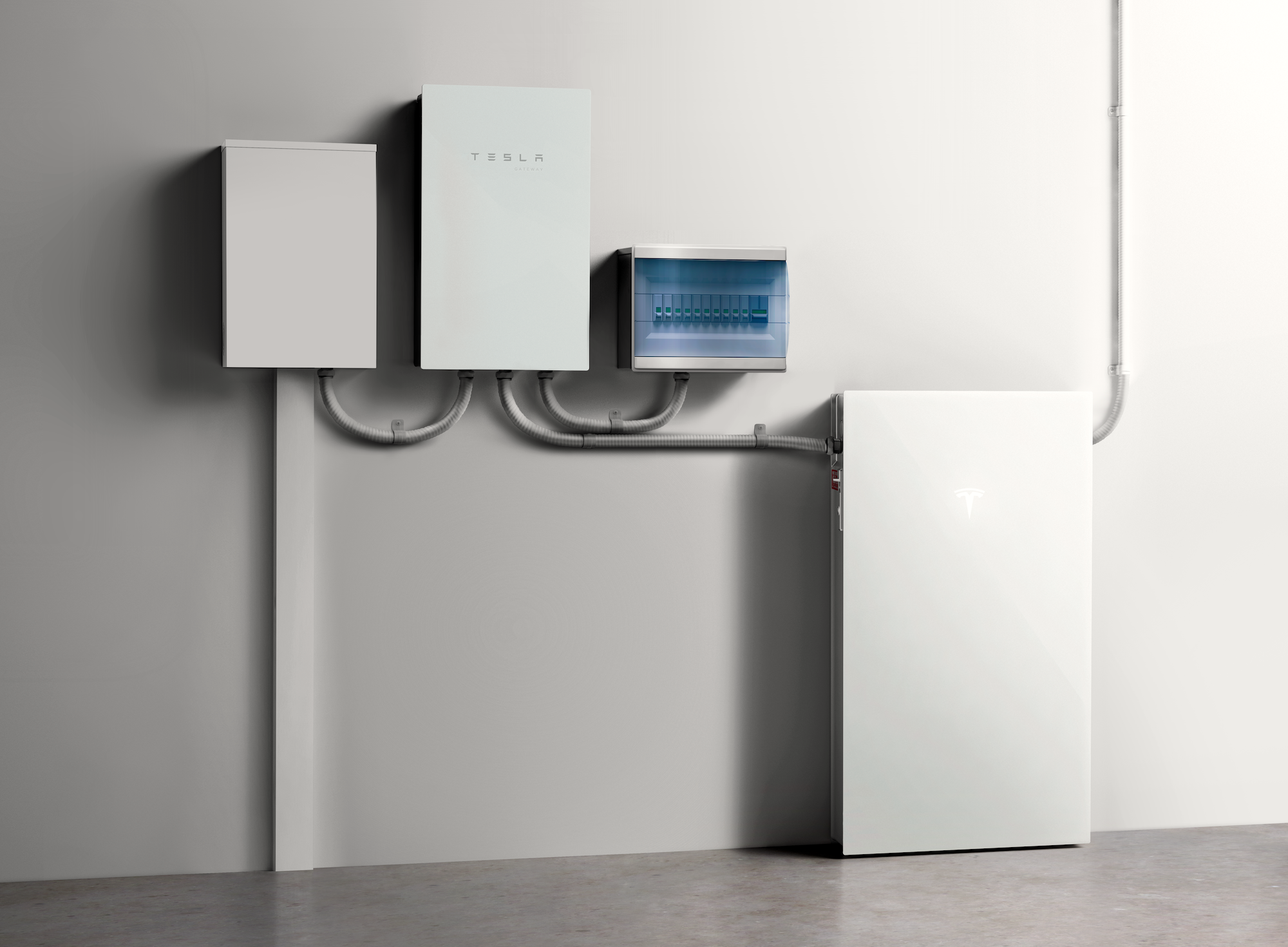
A backup installation includes the Tesla Backup Gateway 2 – a separate piece of equipment that monitors grid status and manages the transition to battery power during an outage. When the grid fails, the Backup Gateway disconnects your home from the grid within a fraction of a second and allows Powerwall to continue supplying your circuits. To anyone inside, the transition is typically imperceptible – lights stay on, the refrigerator keeps running, and connected devices continue working.
Within backup configuration, you have flexibility over which circuits receive protection. Whole-home backup connects your entire consumer unit to Powerwall, meaning every circuit in your home can draw from the battery during an outage. Partial-home backup protects only selected essential circuits – perhaps lighting, refrigeration, internet equipment, and a few sockets – while leaving high-draw circuits like electric showers or cookers on the unprotected side. With partial backup, your battery will last longer during an extended outage.
The Backup Gateway 2 also provides energy monitoring, showing real-time data on solar generation, battery state, home consumption, and grid import/export through the Tesla app.
Not everyone needs power cut protection. If your priority is simply maximising solar self-consumption and reducing electricity bills – and you’re content to accept that Powerwall won’t operate during a grid outage – then a non-backup installation may suit you.
In this configuration, no Backup Gateway is required. Powerwall 3 still stores and discharges energy normally, and you still benefit from the Tesla app’s monitoring and control features via the Tesla Remote Meter system. However, when the grid fails, Powerwall must shut down for safety reasons – it cannot operate in isolation without the Gateway’s islanding capability.
The non-backup approach can reduce overall system cost and simplify installation. It’s a sensible choice for areas with reliable grid supply where power cuts are rare and brief.

How Much Does Tesla Powerwall 3 Cost?
Pricing for Tesla Powerwall 3 varies depending on your chosen configuration, installation complexity, and whether you’re adding it to new solar panels or retrofitting to an existing system. Here are some guideline prices for typical scenarios:
| Configuration | Total Capacity | Guide Price |
|---|---|---|
| 1 x Powerwall 3 (Non-Backup) | 13.5 kWh | £7,995 |
| 1 x Powerwall 3 (Backup) | 13.5 kWh | £9,495 |
| 1 x Powerwall 3 (Non-Backup) + 1 x Expansion Pack | 27 kWh | £11,995 |
| 1 x Powerwall 3 (Backup) + 1 x Expansion Pack | 27 kWh | £13,495 |
A complete installed price typically includes the Powerwall 3, the Backup Gateway 2 (for backup installations), electrical work, commissioning, and DNO notification. For retrofit installations to existing solar systems, additional components such as the Tesla Remote Meter may be required.
When comparing quotes, ensure you’re comparing like for like. Some installers quote for the battery alone, others for a fully installed system. Always confirm what’s included before making a decision.
VAT on Battery Storage
Battery storage installations can qualify for 0% VAT under the Energy-Saving Materials rules, including standalone battery installations from 1 February 2024, provided the installation meets the qualifying conditions.
This applies to residential properties and makes a meaningful difference to the total installed cost. The 0% VAT relief is currently a temporary measure and is scheduled to run until 31 March 2027, unless extended by the government.
Is Powerwall Worth the Investment?
The financial case for Powerwall depends on several factors: your electricity tariff, how much solar energy you generate, your consumption patterns, and how much you value backup power protection.
For homes on time-of-use tariffs – where electricity costs vary by time of day – Powerwall can deliver significant savings by charging from cheap overnight rates and discharging during expensive peak periods.
Homes with solar panels benefit from storing excess daytime generation rather than exporting it at lower feed-in rates. And for those who have experienced disruptive power cuts, the peace of mind from backup capability carries real value beyond pure financial return.
We’re happy to discuss the economics for your specific situation during a site survey. Contact us for a free, no-obligation quote.
Tesla Powerwall Benefits
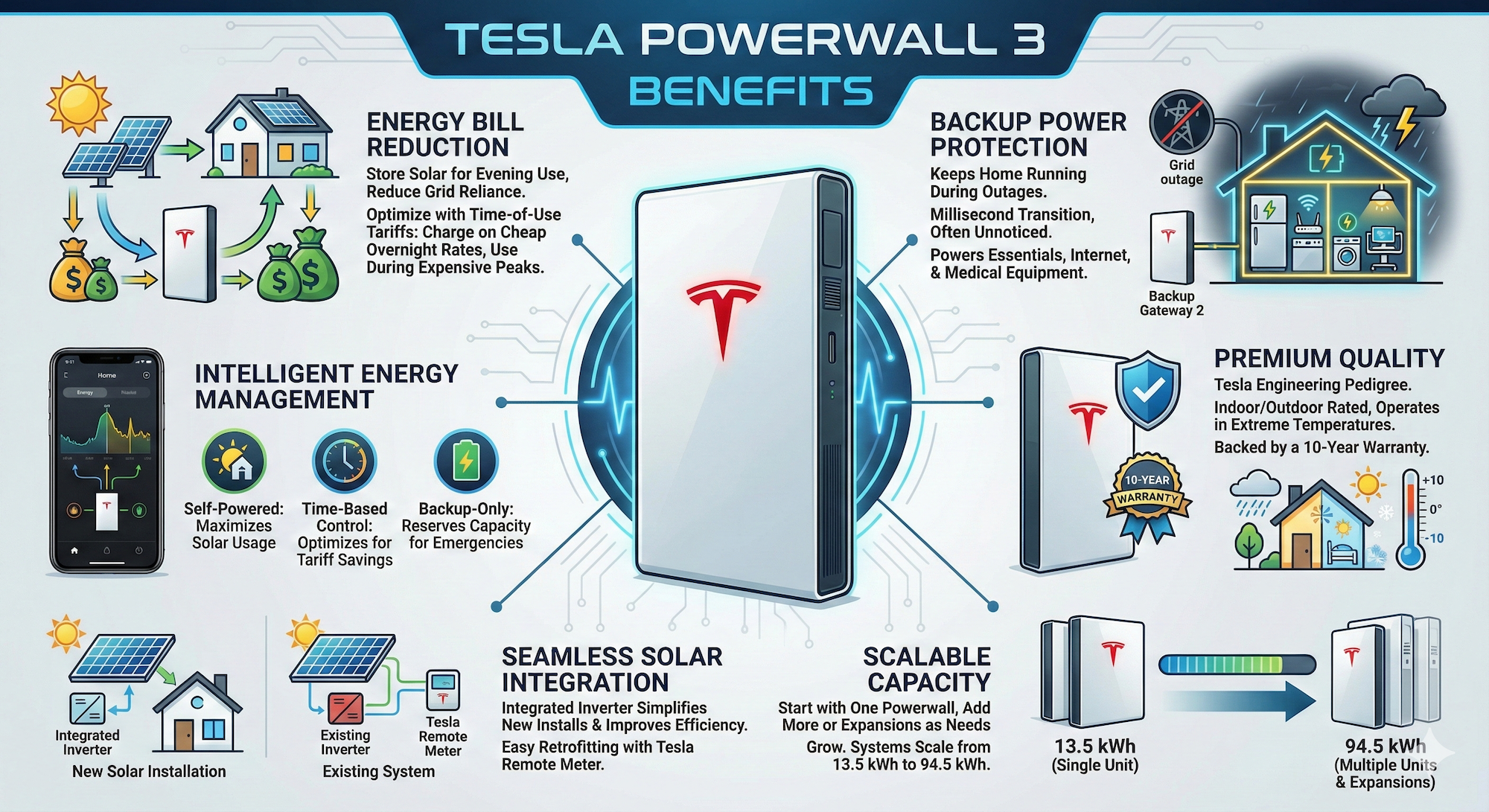
Powerwall 3 offers a compelling combination of benefits that have made it one of the most sought-after home batteries worldwide.
-
Energy bill reduction. By storing solar energy for evening use, you reduce how much electricity you buy from the grid. On time-of-use tariffs, you can also charge Powerwall from cheap overnight rates and use that stored energy during expensive peak periods.
-
Backup power protection. When configured with Backup Gateway 2, Powerwall keeps your home running during grid outages. The transition happens in milliseconds – most people don’t even notice. Essential appliances, lighting, internet, and medical equipment can all continue operating.
-
Intelligent energy management. The Tesla app provides real-time visibility of your home’s energy flows and lets you choose how Powerwall behaves. Self-Powered mode maximises solar usage. Time-Based Control optimises for tariff savings. Backup-Only reserves capacity for emergencies.
-
Premium build quality. Tesla’s engineering pedigree shows in the Powerwall’s construction. The unit is rated for indoor and outdoor installation, operates across extreme temperatures, and is backed by a 10-year warranty when connected to the internet.
-
Seamless solar integration. The integrated inverter simplifies new solar installations and improves efficiency. For existing systems, AC coupling via Tesla Remote Meter makes retrofitting straightforward.
-
Scalable capacity. Start with a single Powerwall and add more units or Expansions as your needs grow. Systems scale from 13.5 kWh to 94.5 kWh.
Installation
Process
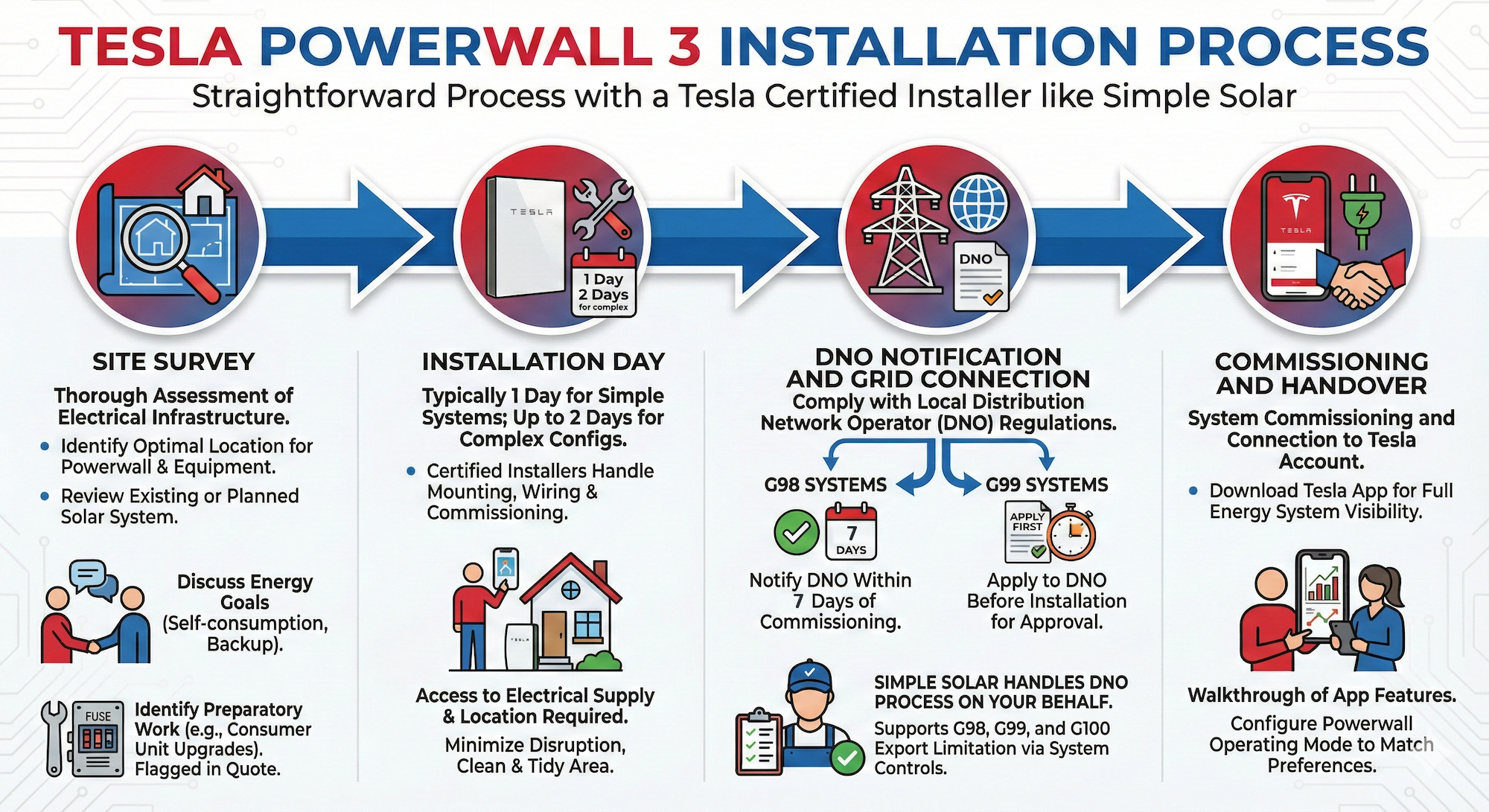
Installing Powerwall 3 is a straightforward process when handled by a Tesla Certified Installer like Simple Solar. Here’s what to expect.
Site Survey
Every installation begins with a thorough site survey. Our team assesses your electrical infrastructure, identifies the optimal location for Powerwall and any associated equipment, and reviews your solar system (existing or planned). We’ll discuss your energy goals – whether that’s maximising self-consumption, securing backup power, or both – and recommend the right configuration.
The survey also identifies any preparatory work needed. Older properties sometimes require consumer unit upgrades to accommodate battery storage safely. We’ll flag any such requirements in your quote.
Installation Day
Powerwall installation typically takes one day for straightforward single-unit systems, though more complex configurations or those involving significant electrical work may extend to two days. Our installers handle all mounting, wiring, and commissioning.
You don’t need to be present throughout, though we’ll need access to your electrical supply and the installation location. We take care to minimise disruption and leave the work area clean and tidy.
DNO Notification and Grid Connection
Battery storage systems connected to the electricity network must comply with local Distribution Network Operator (DNO) regulations. Whether you need a G98 notification or a G99 application depends on the system’s export / connection characteristics:
- For G98 systems, the installer typically commissions the system and notifies the DNO within 7 days.
- For G99 systems, the installer usually needs to apply to the DNO before installation and receive the relevant approval to connect.
As your installer, Simple Solar handles the DNO process on your behalf. You do not need to contact the DNO yourself.
Tesla Powerwall 3 supports compliance with current UK grid requirements, including G98 and G99, when installed with the appropriate Tesla Gateway configuration and commissioned correctly. G100 export limitation, where required by the DNO, is also supported via system controls.
Commissioning and Handover
Once installed, we commission the system and connect it to your Tesla account. You’ll download the Tesla app (if you haven’t already) and gain full visibility of your energy system. We’ll walk you through the app’s features and help you configure Powerwall’s operating mode to match your preferences.








Why Choose Simple Solar
Choosing the right installer is just as important as choosing the right battery. Here’s why customers across the south-west trust Simple Solar.
for Your Powerwall Installation?
- Tesla Certified Installer. We hold official Tesla Certified Installer status, meaning our team has completed Tesla’s training programme and meets their standards for Powerwall installation. This certification ensures your system is installed correctly and that your warranty is fully supported.
- MCS Accredited. Simple Solar is accredited under the Microgeneration Certification Scheme (MCS) for battery storage, the industry-recognised quality standard for renewable energy installations in the UK. MCS accreditation is required for eligibility for various support schemes and demonstrates our commitment to quality workmanship.
- Local expertise. Based in the south-west, we understand the practicalities of installing solar and battery systems in this region. From coastal properties in Cornwall to rural farmhouses in Somerset, we’ve handled installations across diverse property types and conditions.
- End-to-end service. We manage every aspect of your installation: survey, design, supply, installation, commissioning, and DNO notification. You have a single point of contact throughout, and we’re here to support you after installation, too.

Powerwall for Business
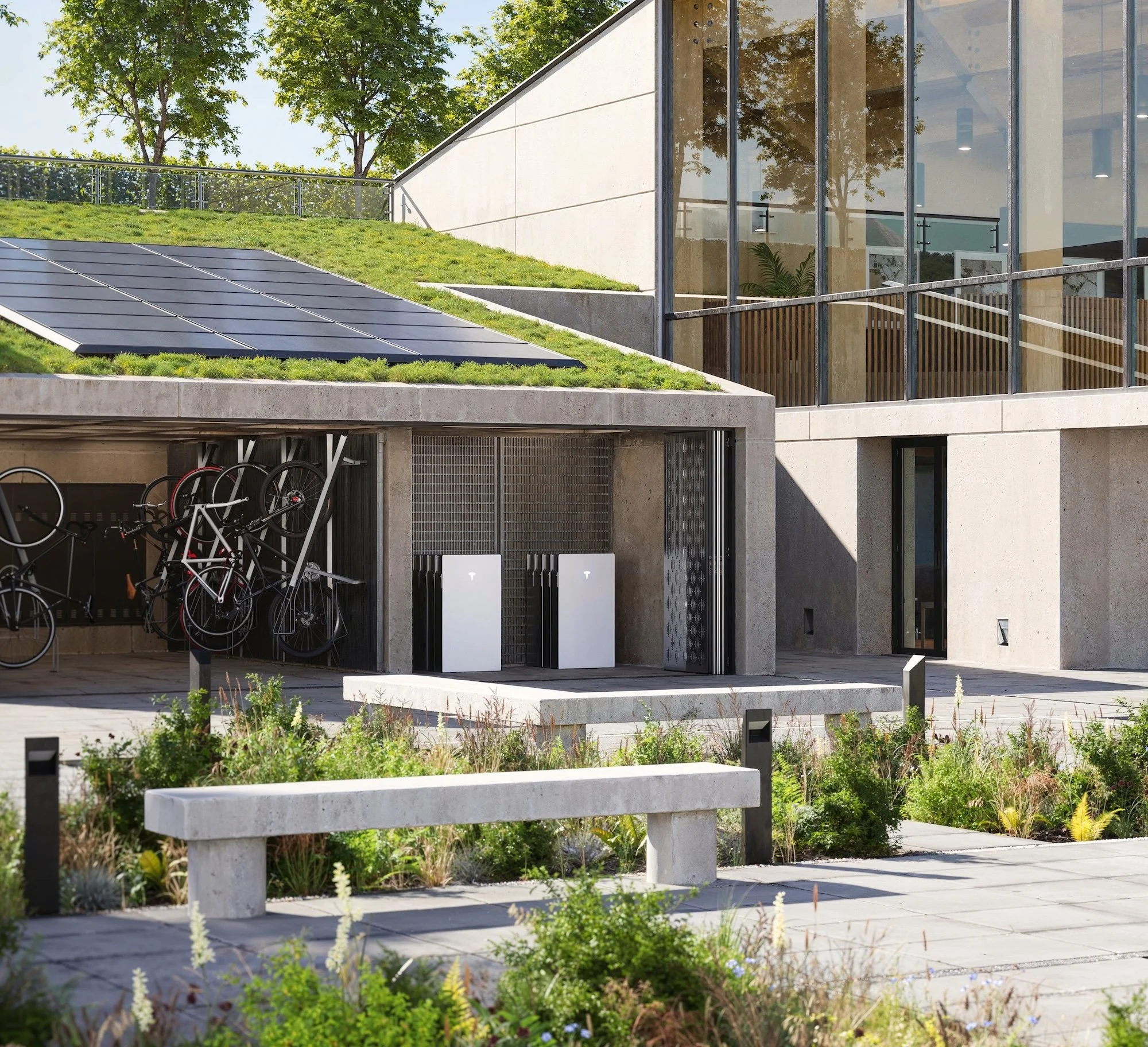
While Powerwall 3 is primarily designed for residential use, its scalability makes it suitable for certain commercial applications as well.
Small businesses with modest energy demands – offices, retail units, workshops – can benefit from the same advantages as residential customers: reduced electricity costs, protection against power cuts, and the ability to maximise on-site solar generation. The ability to install up to four Powerwall 3 units plus Expansions means systems can scale to meet higher energy requirements.
For businesses, backup power capability is often the primary driver. An unexpected power cut can mean lost productivity, spoiled stock, or disrupted customer service. Powerwall provides seamless backup that keeps critical systems running until grid power returns.
Commercial installations may have different considerations around electrical infrastructure, metering arrangements, and business rates. We’re happy to discuss your specific requirements – contact us to arrange a commercial site assessment.
Frequently Asked Questions
-
How long will a Tesla Powerwall power my home?
This depends entirely on your electricity consumption during the period you’re relying on Powerwall. A single Powerwall 3 stores 13.5 kWh. If your home consumes an average of 1.5 kWh per hour during the evening (a reasonable estimate for a typical household running lights, television, refrigeration, and a few other appliances), one Powerwall would last approximately 9 hours.
During a power cut, your consumption will likely be lower if you’re conscious of preserving battery capacity – avoiding heavy loads like kettles, ovens, or electric showers can extend runtime significantly. Conversely, running an electric vehicle charger or other high-draw equipment will deplete the battery much faster.
-
Can I add Tesla Powerwall to my existing solar panels?
Yes. Powerwall 3 can be retrofitted to existing solar installations through AC coupling. Your current solar inverter continues to operate as before, and Powerwall monitors energy flows using the Tesla Remote Meter. This approach works with virtually any existing solar system, regardless of the inverter brand.
Alternatively, if your existing inverter is reaching the end of its life, or is undersized for your panels, it may make sense to replace it and connect your panels directly to Powerwall 3’s integrated inverter. We can advise on the best approach for your situation.
-
What warranty does Tesla Powerwall come with?
Powerwall 3 carries a 10-year warranty from Tesla. The warranty covers defects in materials and workmanship, and guarantees the battery will retain at least 80% of its original capacity over the warranty period.
One important requirement: Powerwall must be reliably connected to the internet throughout its life to qualify for the full warranty. This allows Tesla to monitor system health and push software updates. If internet connectivity is lost for extended periods, warranty coverage may be affected.
-
Is Tesla Powerwall worth it in the UK?
For many homeowners, yes – though the answer depends on your circumstances. Powerwall delivers the greatest value when you have solar panels generating excess energy that would otherwise be exported at low rates, when you’re on a time-of-use tariff with significant peak/off-peak price differences, or when reliable backup power is important to you.
Pure financial payback periods vary. Homes with large solar arrays and high self-consumption potential will see faster returns than those buying a battery primarily for backup. We recommend discussing your specific situation with us. We can help you understand the likely savings and payback for your property.
-
How does Powerwall compare to other home batteries?
Powerwall competes with products from manufacturers including Fox, SunPower, Sigenergy, and others. Each has strengths and weaknesses.
Powerwall’s advantages include exceptional build quality, a polished app experience, seamless backup capability, and the integrated inverter that simplifies new installations. The Tesla brand also carries weight for many buyers.
The right choice depends on your priorities and budget. We can discuss alternatives if Powerwall isn’t the best fit for your needs.
-
Can Powerwall charge from the grid?
Yes. Powerwall 3 can charge from grid electricity at a configurable rate up to 5 kW (or 8 kW if Expansion units are fitted). This is useful for time-of-use tariff optimisation – charging from cheap overnight electricity to use during expensive daytime periods – or for ensuring Powerwall is fully charged ahead of an anticipated power cut.
Grid charging is controlled through the Tesla app. You can set schedules that align with your tariff’s cheap rate periods, or manually trigger charging when needed.
-
How noisy is Tesla Powerwall?
Powerwall 3 operates quietly. Typical noise levels sit below 50 dB(A); roughly equivalent to a modern refrigerator or quiet conversation. Maximum noise levels during intensive operation can reach 62 dB(A), but this occurs infrequently.
Most customers install Powerwall in a garage, utility room, or external location where any noise is imperceptible inside the home.
-
Can I install Powerwall myself?
No. Powerwall must be installed by a Tesla Certified Installer like Simple Solar. This ensures the system is connected safely and correctly, that your warranty is valid, and that appropriate notifications are made to your Distribution Network Operator. DIY installation is not supported and would void your warranty.
Ready to Get Started?
Tesla Powerwall 3 represents the current benchmark for home battery storage, combining generous capacity, high power output, and intelligent software in a package that’s built to last.
Whether you’re installing solar panels for the first time or adding storage to an existing system, Powerwall offers a proven solution backed by Tesla’s engineering expertise and Simple Solar’s local installation knowledge.
Contact Simple Solar today for your free, no-obligation quote or call us on +441752916013. We’ll discuss your energy goals, survey your property, and design a system that meets your needs perfectly.
AUTHOR